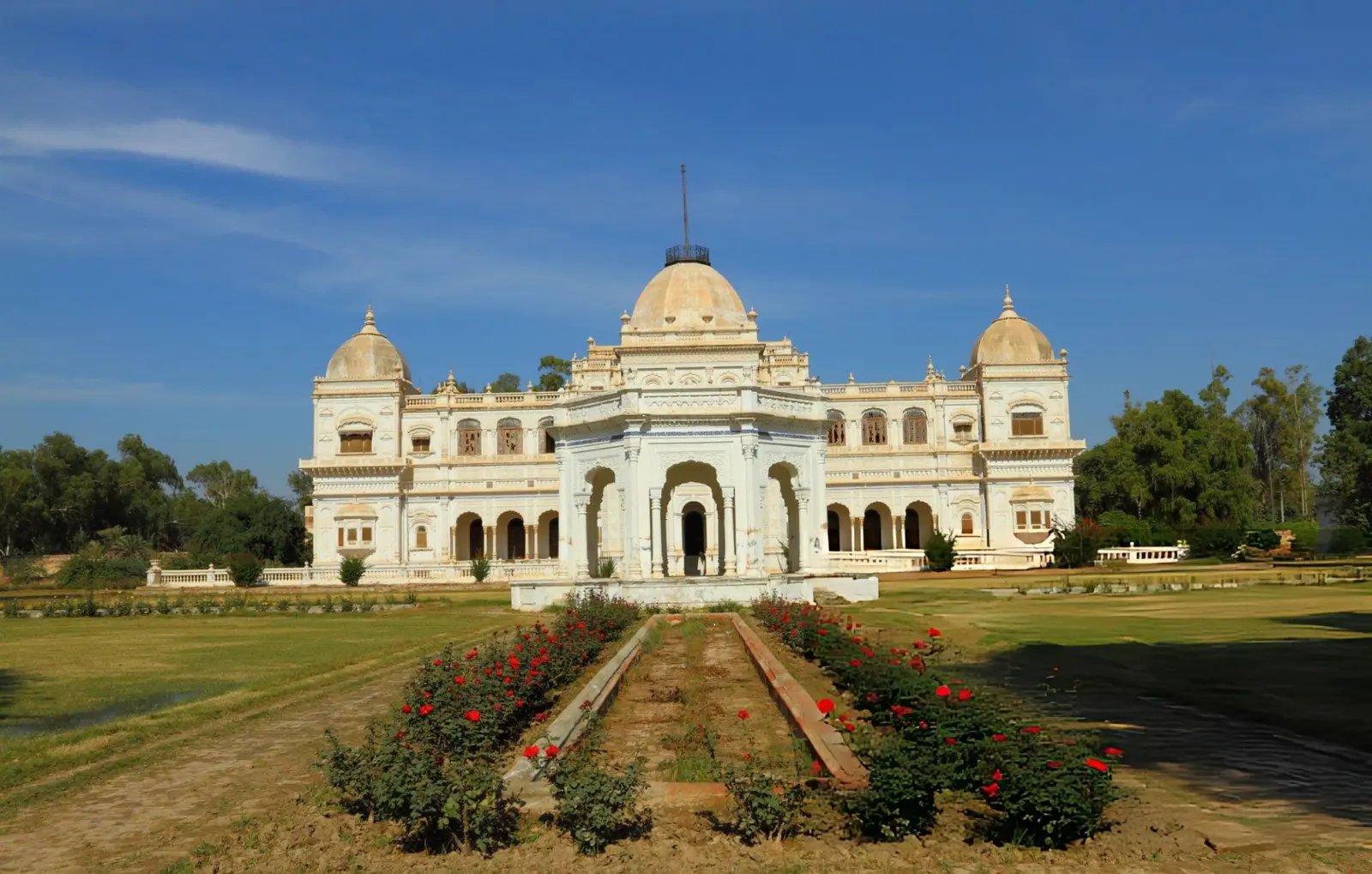
I first heard about Sadiq Garh Palace from a history professor in Bahawalpur who described it as "the palace that ate itself." He meant that the estate's sheer size — 125 acres, three subsidiary palaces, an underground tunnel network — made it impossible for any single family to maintain after the British left and the princely state dissolved. The analogy stuck. Sadiq Garh is less a ruin in the conventional sense and more a complex that's slowly being digested by time, neglect, and legal fragmentation.
Most visitors to Bahawalpur see Noor Mahal — it's maintained, open to the public, and Instagram-ready. Almost nobody drives the extra 50 km to Dera Nawab Sahib to see Sadiq Garh. That's a shame, because this palace tells you more about the ambition, wealth, and eventual decline of the Bahawalpur nawabs than any other building in the district. It's just harder to see, both literally and figuratively.
Why Sadiq Garh matters
Bahawalpur was one of the wealthiest princely states in British India. It covered 45,911 square kilometres — larger than Switzerland — and stretched from the Sutlej River south into the Cholistan Desert. The nawabs had revenue from agriculture, trade, and a treaty relationship with the British that guaranteed their sovereignty in exchange for military cooperation. They spent that money on palaces.
Sadiq Garh was the biggest. While Darbar Mahal served as the administrative heart of the state and Noor Mahal was the compact Italian showpiece, Sadiq Garh was where the nawabs actually lived during winter months. It was their private compound — walled off, self-sufficient, and built to impress visiting British viceroys and foreign dignitaries.
The Express Tribune described Sadiq Garh in 2018 as "abandoned but not forgotten." That captures it. Locals in Dera Nawab Sahib talk about the palace with pride and frustration in equal measure. They know what it was. They can see what it's become. And they can't do much about it.
The nawab and his vision
Nawab Sadiq Muhammad Khan IV commissioned Sadiq Garh in 1882. He was the 11th ruler of the Bahawalpur princely state and one of the most ambitious builders in its 200-year history. Under his rule, Bahawalpur got its first railway line, its first telegraph connection, and a series of palatial constructions that transformed the state capital from a desert outpost into something approaching a royal court.
For Sadiq Garh, the nawab brought in Italian engineers to supervise design and construction. This was consistent with the broader pattern across princely India — Hyderabad's Falaknuma Palace, Mysore's Amba Vilas, Baroda's Laxmi Vilas all employed European architects while incorporating local building traditions. The result at Sadiq Garh was a hybrid: Indo-Islamic spatial planning married to Italianate decorative elements. Symmetrical white façades. A central ribbed dome flanked by four smaller cupolas. European-style elevators alongside traditional carved teak staircases.
Construction took 13 years. Contemporary accounts say approximately 15,000 labourers worked on the site over that decade-plus. The Independent Urdu reported the total cost as Rs 1.5 million — an almost inconceivable sum in the 1880s and 1890s, equivalent to several billion rupees in today's money.
The palace was finished in 1895 and immediately became the winter residence of the Abbasi dynasty. Summer was spent in the cooler hill stations or at the Bahawalpur city palaces. Winter — when the Cholistan Desert is tolerable and the agricultural land around Dera Nawab Sahib turns green — was Sadiq Garh season.
Architecture: domes, tunnels, and 120 rooms
Start with the scale. The entire compound covers roughly 125 acres (51 hectares) — that's about 95 football pitches. Rampart walls 50 feet high surround the estate, turning it into a fortified city within a city. The Express Tribune reports that the complex was "once among the largest private estates in South Asia." Given that competitors included the multi-thousand-acre estates of the Nizam of Hyderabad and the Maharaja of Mysore, that's quite a claim. But Sadiq Garh's combination of built area, gardens, and supporting infrastructure within those fortress walls was genuinely exceptional.
The main palace block sits at the compound's centre. Its white façade presents a symmetrical composition: a central ribbed dome flanked by four smaller cupolas, with projecting bays and arched openings across three floors. The Wikipedia entry on Sadiq Garh describes the style as "Indo-Islamic and Italianate" — a fair summary. It looks like a Mughal palace that spent a semester in Milan.
Inside, approximately 120 large rooms are arranged across the three floors. Here's the detail that gets historians excited: each pair of rooms was decorated to evoke the decorative arts of a different country. One room would be done in Turkish style, the next in French, another in Chinese. The purpose was practical — when the nawab hosted foreign guests (which he did frequently, given the treaty relationship with the British), each dignitary's suite would reflect their home country's aesthetic. It was hospitality as architecture.
Vertical circulation included both traditional carved teak staircases and two early hydraulic elevators — a remarkable technology for 1890s Punjab. Vaulted basements beneath the main block connected to underground passages that ran between buildings across the compound. These tunnels allowed the royal family to move between palaces without being seen from outside — useful for both security and the purdah customs of the era.
Quick reference
Full name: Sadiq Garh Palace (صادق گڑھ پیلس)
Location: Dera Nawab Sahib, Ahmedpur East Tehsil, Bahawalpur District,
Punjab
Coordinates: 29°06'20"N, 71°16'34"E
Commissioned: 1882 by Nawab Sadiq Muhammad Khan IV
Completed: 1895 (13 years of construction)
Architects: Italian engineers with local craftsmen
Style: Indo-Islamic and Italianate
Size: 125 acres (51 ha) behind 50-foot rampart walls
Rooms: ~120 across three floors
Features: Central dome + 4 cupolas, 2 hydraulic elevators, underground
tunnels
Current ownership: Divided among 23 Abbasi family heirs (2005 Supreme Court
ruling)
The three subsidiary mahals
Sadiq Garh wasn't a single building — it was a compound of interconnected palaces. During the princely era, three subsidiary mahals expanded the estate beyond the main block:
Mubarak Mahal (the "Blessed Palace"). Served as the reception and ceremonial wing. Foreign dignitaries and British officials arriving for audiences would be received here before proceeding to the main palace's darbar hall.
Rahat Mahal (the "Comfort Palace"). The private residential wing for the nawab's family. More intimate in scale than the main block, it housed the zenana (women's quarters) and the family's daily living spaces.
Sadiq Mahal. Named for the nawab himself, this served as the state's administrative nerve centre within the compound — offices, meeting rooms, and the chief minister's quarters.
All three were connected to the main palace by underground tunnels. The tunnel network is one of Sadiq Garh's most-discussed features — locals in Dera Nawab Sahib have stories about passages extending beyond the compound walls to other royal properties in the area. How much of that's true and how much is folklore is hard to verify without a proper archaeological survey, which has never been done.
The compound also included a private powerhouse (Sadiq Garh generated its own electricity), a cinema hall, and an armoury. The princely states of the late 19th century operated as semi-independent nations within British India, and Sadiq Garh reflected that self-sufficiency. You could live within those 50-foot walls and never need anything from the outside world.
Royal life inside the compound
The darbar hall was the compound's ceremonial centrepiece. This was where the nawab held formal audiences, received British viceroys, and hosted visiting rulers from other princely states. The Express Tribune describes how the hall displayed retired Ghilaf-e-Kaaba covers — the ornamental fabric that drapes the Kaaba in Mecca. Bahawalpur State had a tradition of producing these covers, and displaying retired ones was both a mark of religious prestige and a reminder of the state's deep ties to the Holy Cities.
Then there were the cars. The nawabs of Bahawalpur maintained one of the largest private Rolls-Royce collections in the subcontinent. Several of these vehicles were garaged at Sadiq Garh. Historic photographs show silver-bodied Rolls-Royce Phantom models, some with custom coachwork, lining the compound's interior roads. The collection was a point of particular pride — and particular loss, once the palace was abandoned.
Daily life in the compound followed the rhythms of a princely court. Military parades on the grounds inside the ramparts. Shooting parties into the surrounding Cholistan scrubland. Audiences in the darbar hall. Private screenings in the cinema. Cricket matches — the Bahawalpur princely family were genuine cricket enthusiasts, and several nawabs patronised the sport at national level.
The compound's infrastructure was advanced for rural Punjab. The private powerhouse provided electricity years before the surrounding towns got any. Running water, a sewage system, and telegraph connections were standard within the walls while villages a few kilometres away relied on wells and oil lamps.
Decline, seizure, and legal battles
The story of Sadiq Garh's decline tracks the story of the princely states themselves.
When Pakistan was created in 1947, the Bahawalpur State acceded to the new country but initially retained its internal autonomy. Nawab Sadiq Muhammad Khan V — the last reigning nawab — continued using Sadiq Garh. But in 1955, the One Unit policy merged all of West Pakistan's provinces and princely states into a single administrative unit, stripping the nawabs of their remaining political power. The privy purses (government stipends paid to former rulers) were eventually abolished in 1972.
That's when things went wrong. In the mid-1970s, the government of Prime Minister Zulfikar Ali Bhutto sealed Sadiq Garh amid a dispute with one branch of the Abbasi family. The precise details of the dispute are tangled in decades of legal filings, but the effect was straightforward: the palace was locked up, its contents nominally under government custody, and nobody was living there to maintain it.
What followed was predictable. Decades of abandonment invited looting. The Express Tribune's 2020 report on the palace's dilapidation describes the systematic theft of antiques, furniture, and — most famously — the Rolls-Royce fleet. Paintings, chandeliers, ceramic tiles, carved woodwork: anything portable was taken over the years. What couldn't be moved was left to rain, heat, and humidity.
Legal proceedings dragged on for nearly three decades. In 2005, the Supreme Court of Pakistan finally issued its ruling, dividing the Sadiq Garh estate among twenty-three heirs of the Abbasi family. That resolved the legal question of ownership. It didn't resolve the question of who would pay for conservation, or who would coordinate maintenance of a 125-acre compound now split between nearly two dozen owners with different financial means and different levels of interest in heritage preservation.
Current condition
Let's be honest: it's bad.
The main palace block still stands, but the interiors have been stripped of almost everything decorative. The 120 rooms that were once furnished in the styles of different countries are now empty shells. The hydraulic elevators don't work. The underground tunnels are partially flooded in places and blocked by debris in others. The private powerhouse is derelict. The cinema screen is long gone.
External walls are cracking. Portions of the rampart have collapsed. In October 2024, Dawn newspaper reported that sewage from a collapsed municipal drain had accumulated outside the main gate — raw sewage pooling against the entrance of one of the subcontinent's great princely palaces. The image was striking for all the wrong reasons.
The fundamental problem is structural: private ownership without conservation obligations. The 23 heirs have legal title but no legal requirement to maintain the palace as a heritage site. Sadiq Garh isn't listed as a protected monument under the Punjab Antiquities Act. There's no government conservation plan. No heritage foundation has taken it on. And the building's sheer size makes private maintenance — even if all 23 heirs agreed to split the cost — financially ruinous.
Compare this to Noor Mahal, which was taken over by the Pakistan Army after independence and has been maintained as a result. Or to Gulzar Mahal, which is smaller and thus more manageable for the family that still controls it. Sadiq Garh falls into the gap between private ownership and public interest — too expensive for its owners, too neglected for the state, and too important to lose.
Visiting Sadiq Garh from Bahawalpur
This section comes with a caveat: there's no formal visitor access. Sadiq Garh is private property, and whether you can see more than the exterior walls depends entirely on circumstance.
Getting there. Dera Nawab Sahib is approximately 50 km east of Bahawalpur — about 45 minutes by car on the road to Ahmedpur East. The palace compound is near the centre of the old town. Any local can point you to it once you're there. If you're hiring a car for the day, combine it with a trip to Uch Sharif (another 35 km further west) for a full heritage day.
What you can see. From the public road, the rampart walls and the main gate are visible. If the gate happens to be open and a caretaker is around, you may be able to enter the outer compound and see the main palace block's façade — the white symmetrical front with its central dome and four cupolas. Interior access is unpredictable and shouldn't be expected.
Photography. Bring a telephoto lens if you want detail shots from outside the walls. The dome and cupolas are visible over the ramparts from several angles. Early morning light works best — the white façade catches the sunrise beautifully.
When to go. October through March. Ahmedpur East has the same brutal desert climate as the rest of Bahawalpur District — summer temperatures regularly exceed 45°C. Winter months are comfortable at 15–25°C.
What else to see nearby. Dera Nawab Sahib itself has a few other nawab-era buildings. Abbasi Mosque at Derawar is accessible from here. The Derawar Fort road trip can be combined into the same day if you start early. And back in Bahawalpur city, the full heritage circuit includes Darbar Mahal, Noor Mahal, Gulzar Mahal, and Nishat Mahal.
Combine with. The most logical day trip from Bahawalpur would be: Sadiq Garh (morning, 45 min drive) → Uch Sharif tombs (35 min further, 2 hours exploring) → back to Bahawalpur for evening. Total driving: about 3 hours. Total sightseeing: 4–5 hours. Pack water and snacks — neither Dera Nawab Sahib nor Uch have tourist-oriented restaurants.
Bottom line: Sadiq Garh Palace is the most important heritage site in Bahawalpur District that you probably can't get into. It's bigger than Noor Mahal, grander than Darbar Mahal, and in worse condition than any of them. The exterior alone — those 50-foot ramparts, the dome visible over the walls — is worth the drive from Bahawalpur. Just don't expect the experience you'd get at a maintained heritage site. This is raw history, unpackaged and unprotected.
Frequently asked questions
Can you visit Sadiq Garh Palace today?
Not officially. The 2005 Supreme Court ruling divided the estate among 23 heirs of the Abbasi family. There's no public ticketing system and no formal visiting hours. Some travellers have gained access by asking local residents or finding a caretaker, but access depends entirely on which heir controls which section of the compound and whether anyone happens to be around. The exterior walls and main gate are visible from the public road through Dera Nawab Sahib.
Where exactly is Sadiq Garh Palace?
In Dera Nawab Sahib, which is now part of Ahmedpur East city in Bahawalpur District, Punjab. It's about 50 km east of Bahawalpur city — roughly a 45-minute drive. The palace compound sits behind high ramparts near the centre of Dera Nawab Sahib. Coordinates: 29°06'20"N, 71°16'34"E.
Who built Sadiq Garh Palace?
Nawab Sadiq Muhammad Khan IV, the 11th ruler of the Bahawalpur princely state, commissioned the palace in 1882. Italian engineers supervised construction, which took 13 years and employed roughly 15,000 labourers. The total cost was reported at Rs 1.5 million — a staggering sum in the 1880s.
How big is Sadiq Garh Palace?
The entire estate covers approximately 125 acres (51 hectares) behind rampart walls 50 feet high. The main palace block has about 120 large rooms across three floors. The compound also includes three subsidiary palaces (Mubarak Mahal, Rahat Mahal, and Sadiq Mahal), a private powerhouse, a cinema, an armoury, and underground tunnel networks connecting the buildings.
What happened to the Rolls-Royce cars at Sadiq Garh?
The nawabs of Bahawalpur maintained a fleet of Rolls-Royce automobiles at Sadiq Garh, one of the largest private collections in the subcontinent. When the government sealed the property in the mid-1970s, decades of neglect and theft followed. The cars, along with antiques, furniture, and artwork, were looted over the years. Most are considered permanently lost.
Is Sadiq Garh Palace protected by the government?
Not in any meaningful way. The palace is privately owned by the Abbasi family heirs following the 2005 Supreme Court division. It isn't listed as a protected monument under the Punjab Antiquities Act. Without government protection or conservation funding, the palace continues to deteriorate. In 2024, sewage from a collapsed municipal drain even submerged the main gate.
How does Sadiq Garh compare to Noor Mahal?
They're from the same royal family but different eras and styles. Noor Mahal (1872) in Bahawalpur city is a compact Italian-Corinthian palace now maintained by the Pakistan Army and open to visitors. Sadiq Garh (1882–1895) is much larger — a 125-acre compound versus Noor Mahal's modest grounds — but it's privately owned, largely inaccessible, and in far worse condition. Noor Mahal is the palace you can see; Sadiq Garh is the one you wish you could.
Related articles
- Bahawalpur Royal Palaces Guide
- Complete Guide to Noor Mahal Bahawalpur
- Darbar Mahal Bahawalpur: Complete Visitor's Guide
- Gulzar Mahal Palace Bahawalpur: The Rose Palace Guide
- Nishat Mahal Bahawalpur: Royal Architecture & Heritage Guide
- Tomb of Bibi Jawindi Uch Sharif: Complete Heritage Guide
- Derawar Fort Cholistan: Complete Planning Guide