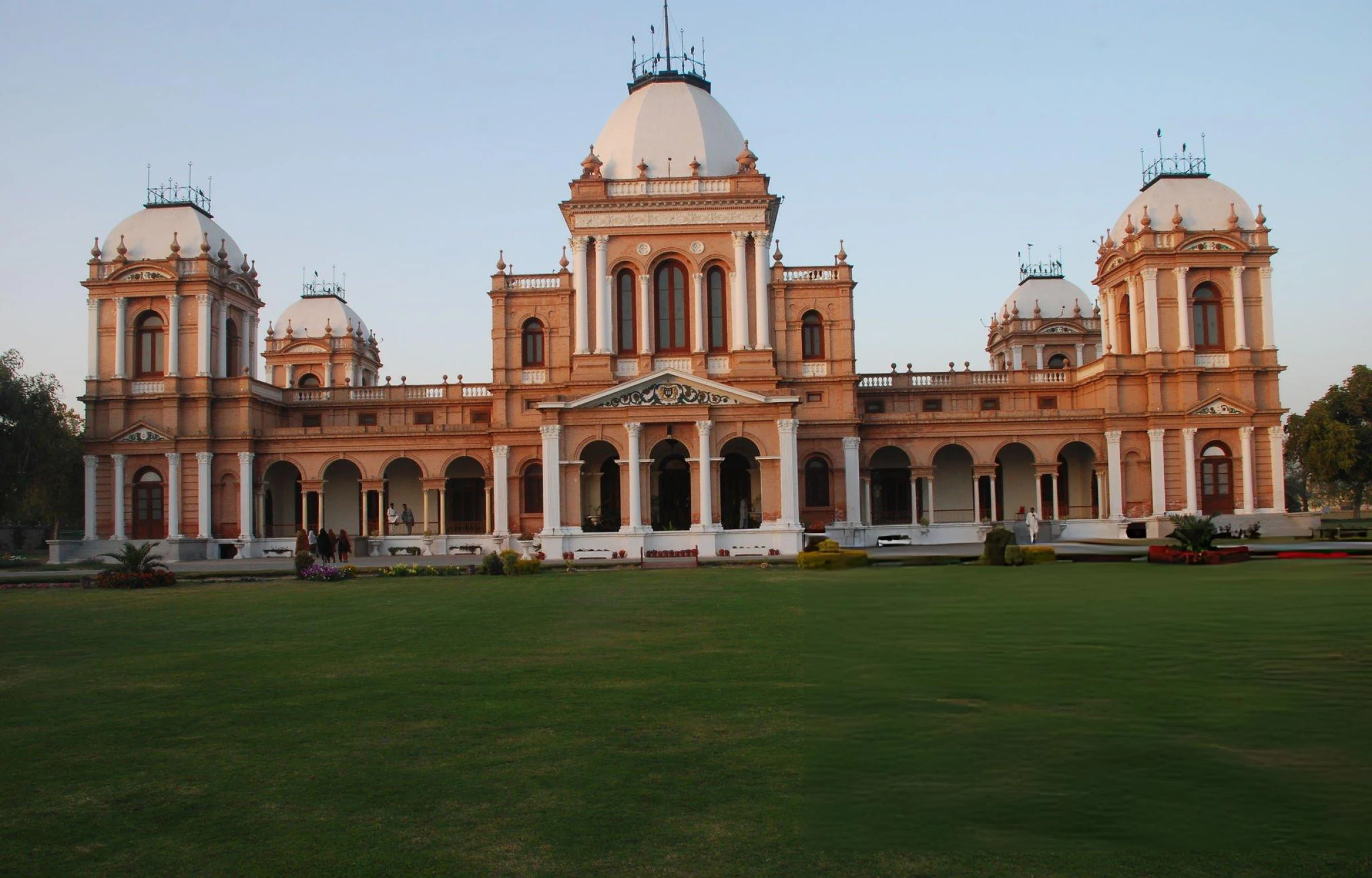
Bahawalpur's palace identity is one of the city's strongest distinctions inside Pakistan, but it becomes much easier to understand when you stop looking for a single "main palace" answer. Noor Mahal is the best-known public-facing landmark. Darbar Mahal reflects state and courtly power. Gulzar Mahal adds the residential side of princely life. Nishat Mahal rounds out the domestic quarter inside the Bahawalgarh compound. Sadiq Garh expands the story out toward Dera Nawab Sahib.
Think of them as one heritage system
These palaces should be read together, not as isolated trivia items. They belong to the wider architectural legacy of the Bahawalpur state. Once you see them as a system, the city stops feeling like a place with scattered monuments and starts feeling like a planned princely landscape. If you want the route-first version of that logic, open the palaces hub before you start choosing individual stops.
The four palace names you need to know
Noor Mahal
Noor Mahal is the introduction point. Founded in 1872 and completed in 1875, it is the palace most visitors should prioritize first. Read the full Noor Mahal guide if you want a single-site breakdown.
Darbar Mahal
Completed in 1905, Darbar Mahal is central to understanding state ceremony and administration. It is one of Bahawalpur's defining monuments, but it should not be casually marketed as a standard open interior visit. Use the Darbar Mahal page when you want the safer contextual framing.
Gulzar Mahal
Built between 1906 and 1909, Gulzar Mahal adds the residential and household side of the palace story. It was the first building in Bahawalpur with concealed electric wiring. Read the full Gulzar Mahal guide for architecture details and visiting tips.
Sadiq Garh Palace
Commissioned in 1882 and completed in 1895 at Dera Nawab Sahib, Sadiq Garh expands the scale of the story. It is not simply another palace in town. It shifts the discussion outward into the broader princely estate geography of the district. Use the Sadiq Garh page when the trip may extend beyond the city.
Practical takeaway
If you only have one short city day, begin with Noor Mahal. If you are building a deeper heritage itinerary, treat the other palaces as context-rich additions rather than guaranteed walk-in attractions.
Why access expectations differ
This is where good orientation matters. Not every palace belongs in the same visitor category. Noor Mahal is the site most people think about first. Darbar Mahal and Gulzar Mahal require more caution in how you describe access. Sadiq Garh, because of ownership and location realities, should also be framed conservatively unless specific arrangements are confirmed.
That may sound limiting, but it actually helps the visitor plan better. You stop wasting time chasing uncertain assumptions and start building a route around what is realistic.
Best route for first-time visitors
For most travelers, the best first route is Noor Mahal, the museum, and a city food layer in the same day. After that, if your interest is growing, move into exterior/contextual reading of the broader palace system. If you have a longer trip and transport flexibility, then add Sadiq Garh as a separate heritage extension rather than forcing everything into one rushed day.
To complete the district picture, read this guide alongside the Derawar and Cholistan guide and the Bahawalpur food guide. That gives you heritage, desert, and local life in one framework.
Frequently asked questions
Which palace should a first-time visitor prioritize?
Noor Mahal is the most practical and recognizable starting point for most people.
Are all Bahawalpur palaces easy to visit from inside?
No. Access expectations vary, and some palaces should be treated primarily as contextual or exterior heritage landmarks unless entry has been confirmed.
Is Sadiq Garh part of a city itinerary?
It is better handled as a separate extension because it sits in Dera Nawab Sahib and belongs to a wider estate geography rather than a quick city-center route.
How many royal palaces are there in Bahawalpur?
The four main palaces associated with the Bahawalpur state are Noor Mahal, Darbar Mahal, Gulzar Mahal, and Sadiq Garh Palace. Nishat Mahal, also inside the Bahawalgarh complex, adds a fifth structure to the heritage picture. Together these form the core palace system visitors should understand.
Can you visit Darbar Mahal from inside?
Darbar Mahal should not be casually marketed as an open interior visit. Access depends on current use and management. Frame it conservatively and confirm before visiting.
What is the history behind Bahawalpur's royal palaces?
The palaces were built across the late 19th and early 20th centuries by the Nawabs of Bahawalpur, a princely state in South Punjab. Each palace served different functions: ceremonial, residential, and administrative. Together they form an architectural legacy of the Bahawalpur state era.
📚 Related Articles