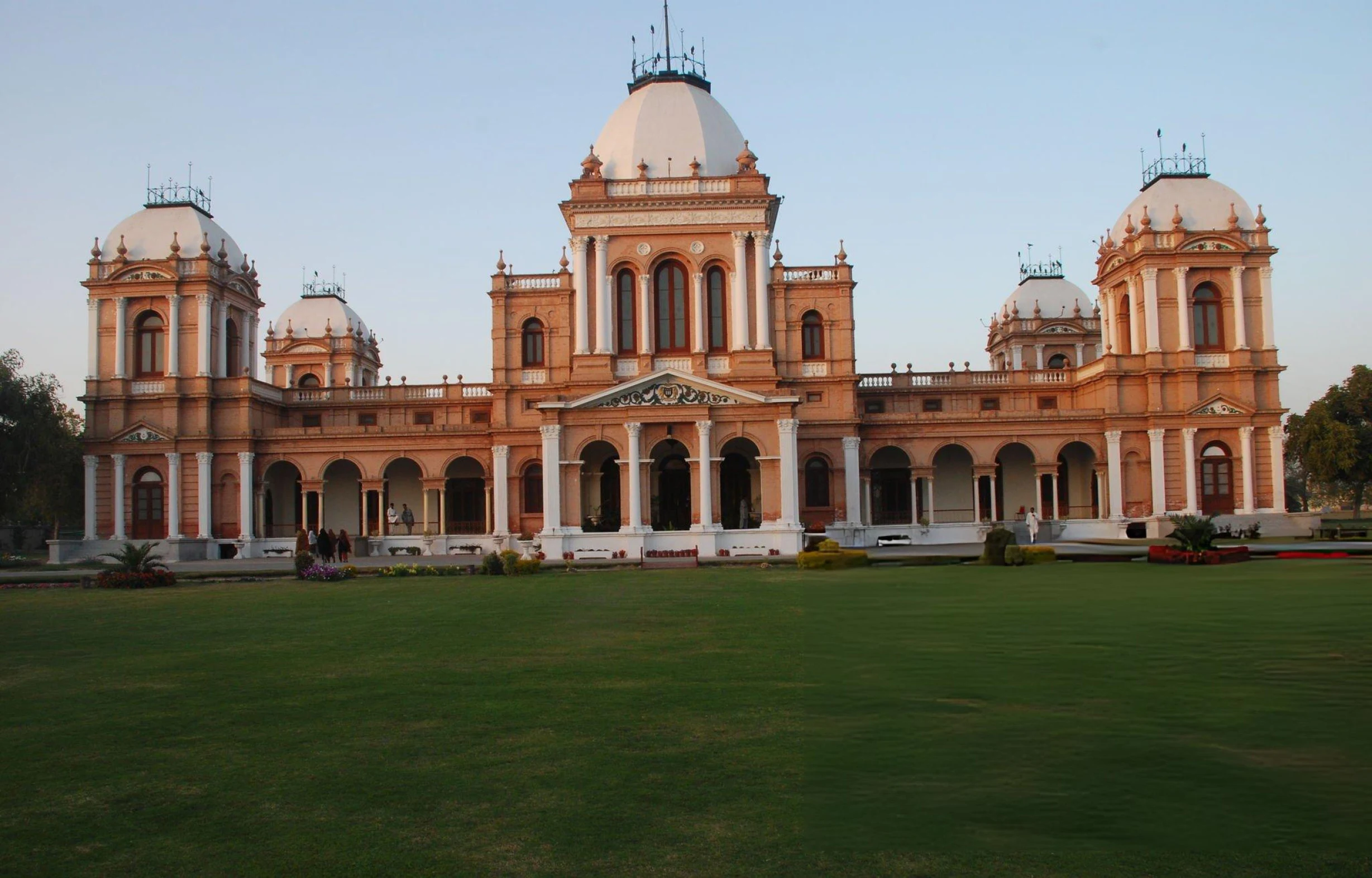
Noor Mahal is the best starting point for understanding Bahawalpur's royal identity. The palace was commissioned by Nawab Sadiq Muhammad Khan IV, its foundation was laid in 1872, and construction was completed in 1875. It sits in Bahawalpur city itself, so unlike some of the region's other heritage landmarks, you do not need a full desert day or a long out-of-city detour to make it part of your plan.
What Noor Mahal is
Noor Mahal is a late-19th-century royal palace associated with the former Bahawalpur state. Public descriptions consistently identify Mr. Heennan, the state engineer, with its design, and the building is known for its neo-classical planning mixed with Islamic detailing. In practical terms, that means it feels different from older Mughal-era sites: more ceremonial, more symmetrical, and more tied to the later princely style of South Punjab.
For a first-time visitor, the useful thing to understand is this: Noor Mahal is not just another pretty building. It is the palace that most clearly communicates how Bahawalpur's rulers wanted to present themselves in the late princely era.
Verified baseline
For Bahawalpur Hub, the safe historical line is: foundation laid in 1872, completed in 1875, commissioned by Nawab Sadiq Muhammad Khan IV, in Bahawalpur city.
Why it matters in Bahawalpur
When people outside the city hear "Bahawalpur," Noor Mahal is often the first landmark they know by name. That is why it works as both a visitor stop and a narrative anchor. If you later go deeper into the palace system through Darbar Mahal, Gulzar Mahal, or Sadiq Garh, Noor Mahal gives you the cleanest introduction.
It also helps correct a common misunderstanding. Bahawalpur is not only about the Cholistan Desert. The city has a real royal urban story, and Noor Mahal is where that story becomes tangible. After seeing it, the rest of the city's heritage stops start to make more sense.
How to plan your visit
The safest advice is to treat Noor Mahal as a half-day city heritage stop, not as a rushed photo stop between other errands. Because public access rules can change, especially under current management realities, confirm the latest visitor conditions before you build a rigid itinerary around interior entry.
If access is available, morning or late afternoon are usually the easiest windows for comfort and photography. In peak summer, Bahawalpur's heat changes the experience of every outdoor site, so October to March remains the sensible season for most visitors.
Do not promise yourself exact ticketing, timing, or photography rules unless you have freshly confirmed them. That sounds obvious, but it matters in Bahawalpur more than on heavily standardized tourism circuits.
Who should prioritize Noor Mahal
- First-time visitors who want one strong heritage stop inside the city
- Families who do not want the logistics of a full Cholistan outing
- Photographers building a royal-architecture route
- Travelers who plan to read the wider palace story before visiting Bahawalpur's royal palaces
What to pair with it in the city
The strongest way to use Noor Mahal is as the centerpiece of a broader city day. Pair it with the Bahawalpur Museum for historical context, then move into the old-city side of the trip around Farid Gate or other bazaar areas for food and atmosphere. If you want a second palace-related layer, use exterior views and contextual reading around the wider palace system rather than assuming every building will be open.
If your interest is more practical travel planning than architecture, you should read this guide alongside the Bahawalpur food guide and the Derawar and Cholistan planning guide. That gives you the two halves of the destination: royal city and desert frontier. For the clearest state-history layer behind the City of Nawabs identity, add the Nawab Dynasty page.
Local note
For many visitors, Bahawalpur becomes much more memorable when Noor Mahal is not treated as a standalone monument. It works best as the opening chapter of a city day, not the whole story.
Frequently asked questions
Is Noor Mahal the most important palace in Bahawalpur?
It is the best-known and most practical starting point for most visitors, but it is part of a bigger palace network that also includes Darbar Mahal, Gulzar Mahal, and Sadiq Garh.
Can you always go inside Noor Mahal?
No. Access conditions can change, so confirm current visitor rules before promising yourself an interior visit.
Should Noor Mahal be combined with Derawar Fort on the same day?
Usually no. Noor Mahal works best as a city heritage stop, while Derawar is better treated as a separate full-day Cholistan outing.
What is the entry ticket price for Noor Mahal?
Ticket pricing can change and may differ for local and foreign visitors. Confirm the latest entry fee at the site or through local tourism contacts before your visit rather than relying on outdated online figures.
What is the best time to visit Noor Mahal?
October to March offers the most comfortable weather. Morning and late afternoon are the best windows for photography and outdoor comfort. Avoid peak summer midday when Bahawalpur heat makes outdoor heritage visits difficult.
Is photography allowed inside Noor Mahal?
Photography rules depend on the current management and access status. Exterior photography is generally straightforward, but interior permissions should be confirmed on site before assuming you can shoot freely.
📚 Related Articles