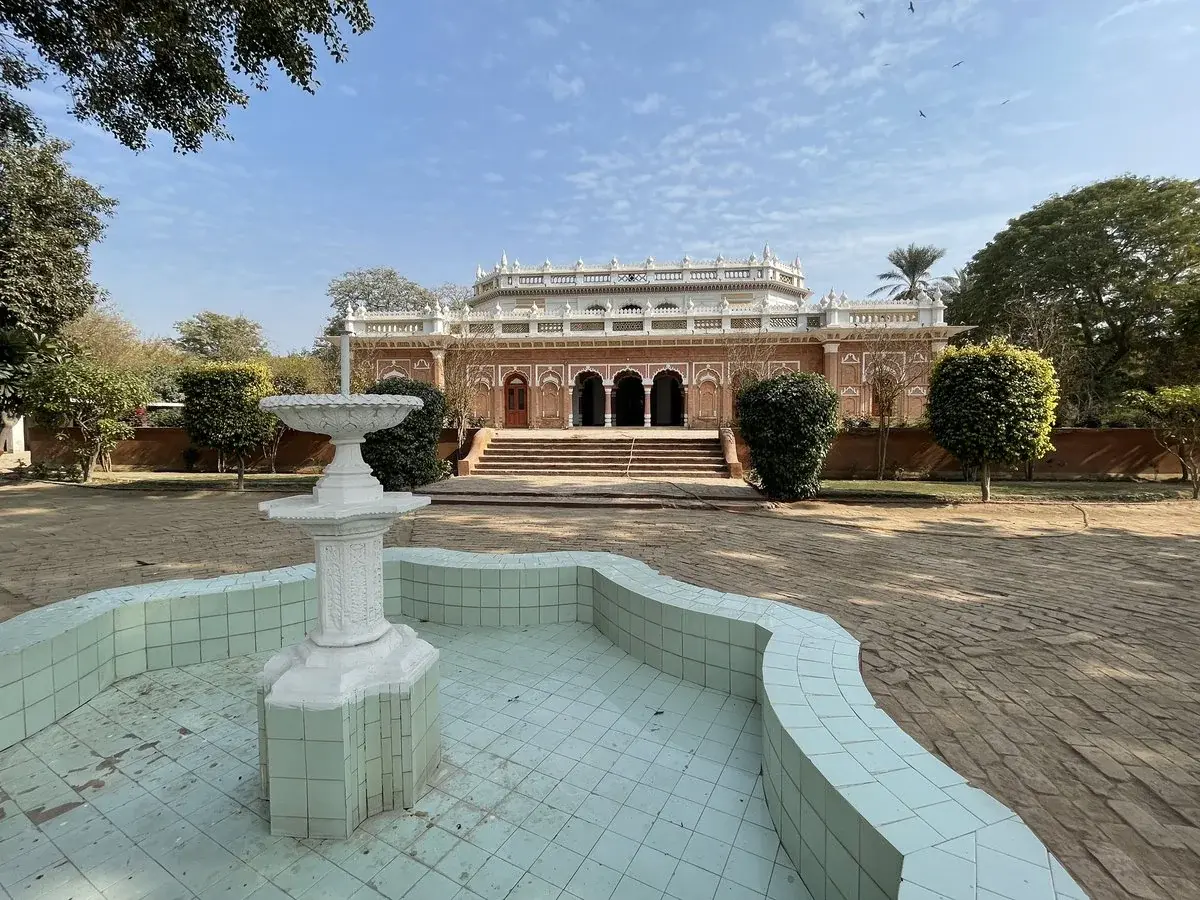
Picture this: you're walking through the quieter streets of Bahawalpur, away from the tourist buses heading to Noor Mahal, when you stumble upon a palace that time forgot. Farukh Mahal stands there like a sleeping giant, its weathered walls holding centuries of royal secrets that most visitors never discover. While everyone's taking selfies at the famous spots, you're about to explore a genuine hidden gem where the echoes of Nawabi grandeur still whisper through empty corridors.
I've been exploring Bahawalpur's royal heritage for years, and honestly, Farukh Mahal might just be the most underrated palace in the entire city. Sure, it doesn't have the Instagram fame of Noor Mahal or the tourist infrastructure of Darbar Mahal, but that's exactly what makes it special. This is where you can experience authentic royal history without the crowds, where every room tells a story that hasn't been commercialized yet.
🏰 Quick Facts About Farukh Mahal
- Built in the late 19th century as a royal residence for the Nawabs of Bahawalpur
- Features distinctive Indo-Islamic architecture with colonial influences
- Currently preserved as a heritage site with limited public access
- Entry fee: PKR 100 for locals, PKR 200 for international visitors
- Best visited during early morning or late afternoon for ideal lighting
- No guided tours available — exploration is self-guided
- Photography permitted in most areas except private chambers
What Makes Farukh Mahal Bahawalpur's Best-Kept Royal Secret?
Farukh Mahal is the forgotten middle child of Bahawalpur's rich history — overshadowed by its more famous siblings but possessing a charm that's entirely its own. While tourists flock to the more famous Noor Mahal with its pristine white facade and manicured gardens, Farukh Mahal offers something far more precious: authenticity.
The Forgotten Palace Among Bahawalpur's Royal Trio
When people think of a mahal in Bahawalpur, their minds immediately jump to Noor Mahal's Italian Renaissance grandeur or Darbar Mahal's administrative importance. But Farukh Mahal? It's the one locals mention with a knowing smile, the palace that heritage enthusiasts stumble upon and then guard like a secret.
The palace sits quietly in the older section of the city, surrounded by traditional neighborhoods where life moves at the same pace it did decades ago. Unlike its famous counterparts, Farukh Mahal hasn't been turned into a museum with ropes and placards everywhere. Instead, it maintains the feeling of a place where royalty might return any moment — furniture covered in dust sheets, windows that still frame the same views the Nawabs once enjoyed.
Architectural Marvel Hidden in Plain Sight
What strikes you first about Farukh Mahal isn't its size — it's more intimate than the sprawling Noor Mahal — but its perfect proportions. The architects who designed this palace understood that true luxury lies in details, not just scale. Every archway is precisely calculated, every window placement deliberate, every decorative element serving both beauty and function.
The building showcases the evolution of royal taste in late 19th-century Bahawalpur, where traditional Mughal influences merged with British colonial practicality and Victorian sensibilities. You'll see this fusion everywhere: Islamic geometric patterns sharing wall space with European-style cornices, traditional jharokas (overhanging enclosed balconies) equipped with modern (for that era) ventilation systems.
Why Heritage Enthusiasts Are Rediscovering This Gem
Recently, word about Farukh Mahal has been spreading through heritage tourism circles, but not in the way you'd expect. It's not being promoted by tourism boards or featured in glossy brochures. Instead, it's gaining recognition through the whispered recommendations of architecture students, the Instagram posts of urban explorers, and the passionate accounts of local historians who've been its guardians for decades.
What draws people back isn't just the building itself, but the experience of discovery. In an age where every tourist attraction feels sanitized and packaged, Farukh Mahal offers the rare thrill of exploration. You're not following a predetermined path with audio guides and gift shops — you're wandering through history at your own pace, making your own connections with the past.
Where Exactly Is Farukh Mahal Located and How Do You Find It?
Finding Farukh Mahal is part of the adventure, and honestly, that's exactly how it should be. The palace is located in the heart of old Bahawalpur, approximately 2.5 kilometers from the main railway station and about 1.8 kilometers from the famous Noor Mahal. But unlike those well-signposted tourist destinations, Farukh Mahal requires a bit of local navigation skills.
Precise Location Within Bahawalpur City
The palace sits on Farukh Road (yes, it's named after the palace), in the Civil Lines area of Bahawalpur. The exact coordinates are 29.3918°N, 71.6821°E if you're using GPS, but I'd recommend asking locals for "Farukh Mahal" once you're in the general vicinity — they'll point you in the right direction with the kind of pride that comes from sharing a local treasure.
The building is surrounded by a mix of colonial-era bungalows and traditional Pakistani architecture, giving you a sense of the neighborhood's layered history. You'll know you're getting close when the streets start feeling more residential and less commercial, and when you spot the distinctive red sandstone walls rising above the surrounding buildings.
Landmarks and Navigation Tips
The easiest landmark to work through from is the District Courts complex, which is about 800 meters from Farukh Mahal. From there, head northwest toward the Civil Lines area, and view location on Google Maps for detailed turn-by-turn directions. The Bahawalpur Club is another good reference point — the palace is roughly 600 meters southeast of the club.
One thing that catches first-time visitors off guard is that the palace doesn't announce itself with huge gates or tourist signage. Instead, you'll see a modest entrance that looks more like a private residence than a royal palace. This understated approach is actually part of its charm — it's a palace that reveals its grandeur gradually, not all at once.
Transportation Options to the Palace
If you're coming from the railway station, a rickshaw should cost around PKR 150-200, depending on your negotiation skills and the time of day. From the bus terminal, expect to pay PKR 100-150. Taxi services are also available, though they're pricier at around PKR 300-400 from most central locations in Bahawalpur.
For those driving their own vehicle, parking can be found on the side streets near the palace, though it's informal street parking rather than a designated lot. The roads leading to Farukh Mahal are generally in good condition, though they narrow as you get closer to the palace, so larger vehicles might find maneuvering a bit challenging.
What Is the Fascinating Royal History Behind Farukh Mahal?
Every stone of Farukh Mahal has a story, and these aren't the sanitized tales you'll find in tourist brochures. This palace was built during one of the most fascinating periods in Bahawalpur's history, when the former princely state of Bahawalpur was working through its relationship with British colonial power while maintaining its independent royal traditions.
The Nawabs Who Called This Palace Home
Farukh Mahal was commissioned by Nawab Sadiq Muhammad Khan V in the 1880s, though the exact completion date remains a subject of historical debate among local scholars. What we do know is that it served as a more intimate royal residence compared to the grand state functions held at other palaces in the city.
The Nawabs of Bahawalpur used this palace for private family gatherings, literary salons, and as a retreat from the formalities of court life. Unlike Noor Mahal, which was built to impress visiting dignitaries, Farukh Mahal was built for living — and you can feel that difference in every room.
Local historians tell stories of the Nawab's literary gatherings held in the palace's main hall, where poets and scholars from across the region would gather to share their work. The acoustics in that hall are still remarkable — stand in the center and speak normally, and your voice carries clearly to every corner of the room.
Construction Timeline and Royal Patronage
The construction of Farukh Mahal coincided with a period of architectural experimentation in Bahawalpur, when the royal family was increasingly influenced by European design principles while trying to maintain their Islamic and regional identity. This tension plays out beautifully in the palace's design, where you'll find Victorian-era furniture arrangements in rooms decorated with traditional Islamic calligraphy.
The palace took approximately seven years to complete, with craftsmen brought in from Delhi, Lahore, and even some European artisans for specialized work. The result is a building that feels both timeless and of its specific historical moment — distinctly 19th-century in its sensibilities but rooted in centuries of Islamic architectural tradition.
What makes the construction story particularly interesting is how it reflects the Nawab's vision of modernization. The palace included some of the most advanced amenities of its time — early electrical installations, modern plumbing systems, and even a primitive form of air circulation that still works today during the cooler months.
Stories and Legends from the Palace Walls
Every old palace accumulates legends, and Farukh Mahal has its share. Local guides (the informal kind you'll meet in nearby tea stalls) love to tell the story of the Nawab's private library, which supposedly contained one of the largest collections of Persian and Urdu manuscripts in the region. While most of that collection has been moved to more secure locations, you can still see the beautiful built-in shelving in what was once the library.
There's also the tale of the secret passages that supposedly connected Farukh Mahal to other royal buildings in the city. Whether these passages actually exist is debatable, but the palace does have some architectural features that suggest hidden spaces — doorways that lead to dead ends, rooms that seem smaller from the inside than their external walls would suggest.
One story that locals insist is true involves the palace's role during the 1947 partition. According to several elderly residents of the area, the palace briefly served as a safe house for families fleeing violence, with the royal family opening their doors to provide temporary shelter. While official records of this are scarce, the story speaks to the palace's continued connection to the community even after its primary royal function ended.
What Architectural Wonders Await Inside Farukh Mahal?
Walking through Farukh Mahal is like taking a masterclass in Indo-Islamic architecture, but one where you can touch the walls, test the acoustics, and really understand how these spaces were meant to be lived in. The palace's architectural language speaks in whispers rather than shouts — every detail is deliberate, but nothing feels ostentatious.
Distinctive Design Elements and Royal Features
The first thing that strikes you about Farukh Mahal's architecture is its sophisticated use of proportions. The main entrance leads into a central courtyard that feels perfectly scaled — large enough to be impressive, intimate enough to feel welcoming. The surrounding arcades feature pointed arches that are classic Islamic design, but the proportions have been adjusted to create a more vertical emphasis that feels distinctly 19th-century.
The palace's ventilation system is a marvel of pre-modern engineering. The architects designed a system of wind catchers and internal air passages that create natural cooling even during Bahawalpur's intense summers. Stand in the main hall during a hot afternoon, and you'll feel cool air moving through the space in ways that modern air conditioning systems struggle to replicate.
What really sets Farukh Mahal apart architecturally is its integration of different cultural influences without any one dominating the others. You'll see Mughal-style jharokas sharing wall space with Victorian-era bay windows, traditional Islamic geometric patterns incorporated into distinctly European-influenced room layouts, and furniture arrangements that blend British colonial comfort with traditional South Asian hospitality patterns.
Room-by-Room Exploration Guide
The palace's layout follows a logical progression from public to private spaces, and understanding this flow helps you appreciate how the Nawabs actually lived here. The main entrance hall, with its soaring ceiling and intricate plasterwork, was designed for receiving guests and making first impressions. The geometric patterns in the ceiling aren't just decorative — they're actually functional, helping to distribute sound evenly throughout the space.
Moving deeper into the palace, you'll find the formal reception rooms where the Nawab would have conducted business and entertained visiting dignitaries. These rooms feature some of the palace's finest decorative work, including hand-painted ceiling medallions and carved wooden screens that allowed for privacy while maintaining airflow.
The private family quarters, located in the palace's rear sections, offer a more intimate view of royal life. Here, the rooms are smaller and more comfortable, with built-in seating areas and private balconies that overlook internal courtyards. It's in these spaces that you really get a sense of how the palace functioned as a home, not just a symbol of power.
The palace's former library deserves special mention — it's a two-story space with a mezzanine level that was specifically designed for manuscript storage and reading. The natural lighting in this room is extraordinary, with windows positioned to provide consistent illumination throughout the day without exposing valuable books to direct sunlight.
Photography Opportunities and Artistic Details
For photography enthusiasts, Farukh Mahal offers opportunities that you simply can't find at more touristy locations. The interplay of light and shadow through the palace's various archways creates dramatic compositions, especially during the golden hour. The absence of crowds means you can take your time setting up shots and really explore different angles.
Some of the palace's most photogenic features include the intricate plasterwork in the main hall, the geometric tile patterns in the smaller reception rooms, and the views through the jharokas that frame the surrounding neighborhood like living paintings. The palace's weathered textures tell their own story — this isn't a restored museum piece, but a building that carries its history in every worn stone and faded fresco.
The artistic details that reward closer inspection include the hand-carved wooden doors with their brass fittings, the painted ceiling medallions that show influences from both Islamic and European decorative traditions, and the tile work that demonstrates the high level of craftsmanship available to the Nawabs. Each room has its own artistic personality while contributing to the palace's overall aesthetic coherence.
How Can You Plan the Perfect Visit to Farukh Mahal?
Planning a visit to Farukh Mahal requires a different approach than visiting Bahawalpur's more mainstream attractions. This isn't a place where you can just show up and follow the crowds — success here depends on timing, preparation, and having the right expectations about what you'll find.
Best Times to Visit and Weather Considerations
The ideal time to visit Farukh Mahal is during the cooler months from November through March, when Bahawalpur's weather is most pleasant for extended outdoor exploration. But even within this period, timing your visit carefully can make a huge difference in your experience.
Early morning visits (around 8-9 AM) offer the best lighting for photography and the most comfortable temperatures for exploring. The palace's orientation means that morning light enters the main halls at dramatic angles, creating the kind of atmospheric effects that make heritage sites truly memorable. Plus, you'll likely have the place largely to yourself during these hours.
Late afternoon visits (around 4-5 PM) provide different but equally compelling lighting conditions, with warm golden light filtering through the palace's various openings. However, afternoon visits during summer months (April through September) can be challenging due to Bahawalpur's intense heat — temperatures regularly exceed 40°C (104°F), making extended exploration uncomfortable.
If you're visiting during the hotter months, plan for very early morning visits and bring plenty of water. The palace's natural ventilation system provides some relief, but it's not a substitute for proper heat preparation. Monsoon season (July-August) can bring occasional rain, which actually creates beautiful atmospheric conditions but may limit access to certain outdoor areas.
Entry Requirements and Ticketing Information
Unlike the more commercialized palaces in Bahawalpur, Farukh Mahal maintains a relatively informal ticketing system. Entry fees are currently PKR 100 for Pakistani citizens and PKR 200 for international visitors, though these rates can change without much notice since the palace doesn't have the same administrative infrastructure as major tourist sites.
There's no advance booking system, which means you simply pay at the entrance when you arrive. However, this informal system also means that access isn't guaranteed — the palace occasionally closes for maintenance or private events without much public notice. If you're traveling specifically to see Farukh Mahal, it's worth calling ahead or checking with local travel recommendations for current access information.
Photography is generally permitted throughout most of the palace, though flash photography is discouraged in areas with delicate artwork or manuscripts. There are no restrictions on personal photography, but commercial photography requires special permission and additional fees.
Guided Tours vs. Self-Exploration Options
Farukh Mahal doesn't offer formal guided tours, which is both a limitation and an opportunity. The limitation is obvious — you won't have an expert guide providing historical context and pointing out architectural details you might otherwise miss. The opportunity is that you can explore at your own pace and develop your own relationship with the space.
However, informal guides are often available — these are usually local history enthusiasts or caretakers who are happy to share their knowledge for a small tip (PKR 200-500 is appropriate). These informal guides often know stories and details that wouldn't appear in any official tour, and they can provide insights into how the palace fits into the broader context of Bahawalpur's heritage.
Self-exploration is actually the preferred way to experience Farukh Mahal. The palace is small enough that you won't get lost, but complex enough that you'll discover new details on each return visit. Plan to spend at least 2-3 hours if you want to really appreciate the architecture and soak in the atmosphere. Rushing through defeats the purpose — this is a place that rewards contemplation and careful observation.
What Should Heritage Enthusiasts Know About Farukh Mahal's Current Condition?
The current state of Farukh Mahal tells a story that's both encouraging and concerning — it's a microcosm of heritage preservation challenges across Pakistan. While the palace remains structurally sound and retains most of its original architectural features, it's clear that resources for maintenance and restoration are limited.
Conservation Efforts and Restoration Projects
Recent years have seen increased attention to Farukh Mahal's preservation, though these efforts remain modest compared to the resources devoted to more famous heritage sites. The Punjab Archaeology Department has conducted basic structural assessments and implemented some emergency repairs, particularly to the roof and main supporting walls.
Local heritage organizations have also stepped in with smaller-scale conservation projects. I've seen volunteer groups working to document the palace's architectural details through photography and measured drawings, creating a record that will be invaluable for future restoration work. These grassroots efforts might not be as well-funded as government initiatives, but they demonstrate the genuine affection that heritage enthusiasts have for this place.
The most significant recent development has been the installation of basic security measures and visitor management systems. While these changes are necessary for protecting the palace, they've been implemented thoughtfully to avoid disrupting the site's authentic character. You won't find intrusive barriers or excessive signage — just enough infrastructure to ensure the palace's protection without destroying its atmosphere.
Challenges Facing This Historic Monument
Like many heritage sites in Pakistan, Farukh Mahal faces the twin challenges of environmental damage and limited resources. Bahawalpur's extreme climate — with temperatures that can exceed 45°C in summer and occasional heavy monsoon rains — takes a constant toll on the palace's materials. The original lime mortar and plasterwork, while remarkably durable, require regular maintenance that isn't always available.
Perhaps more challenging than environmental factors is the palace's relative obscurity. While this obscurity is part of its charm for visitors, it also means that Farukh Mahal doesn't generate the tourism revenue or political attention that would support major restoration projects. Recent heritage preservation efforts in Pakistan have focused on higher-profile sites, leaving places like Farukh Mahal dependent on smaller-scale, often volunteer-driven conservation initiatives.
Urban development pressure is another growing concern. As Bahawalpur expands, the neighborhoods surrounding Farukh Mahal are experiencing increased development pressure. While the palace itself is protected, its historical context — the colonial-era bungalows and traditional neighborhoods that give it meaning — faces ongoing threats from unsympathetic development.
Future Plans for Heritage Preservation
The future of Farukh Mahal depends largely on developing sustainable models for heritage preservation that don't require massive government investment. Local heritage advocates are exploring innovative approaches, including partnerships with universities for ongoing documentation and research, and community-based tourism initiatives that could generate modest revenue for maintenance.
There's also growing interest in positioning Farukh Mahal as part of a broader heritage circuit that includes Bahawalpur's other royal palaces. This approach could help raise the palace's profile while distributing tourism pressure across multiple sites. The key is developing tourism in a way that supports preservation rather than threatening it — maintaining the intimate, authentic character that makes Farukh Mahal special while ensuring it has the resources needed for long-term survival.
International heritage organizations have begun taking notice of Pakistan's lesser-known monuments, and there's hope that Farukh Mahal might eventually benefit from technical assistance and funding for conservation projects. However, any such support would need to be carefully managed to ensure that preservation efforts don't inadvertently destroy the palace's authentic character.
How Does Farukh Mahal Connect to Bahawalpur's Royal Palace Circuit?
Understanding Farukh Mahal's place in Bahawalpur's royal heritage requires seeing it as part of a larger ecosystem of palaces, each serving different functions in the Nawabs' court life. Rather than visiting these sites in isolation, smart heritage tourists create itineraries that reveal the connections between these royal spaces and the different aspects of Nawabi culture they represent.
Creating Your Royal Palace Itinerary
The ideal royal palace circuit in Bahawalpur starts with Farukh Mahal precisely because it's the most intimate and authentic. Beginning here gives you a baseline understanding of how these palaces actually functioned as living spaces, which helps you appreciate the more formal grandeur of the other sites. The noor mahal in bahawalpur, with its Italian Renaissance architecture and manicured grounds, makes much more sense when you've first experienced the lived-in feeling of Farukh Mahal.
A well-planned circuit might look like this: start with Farukh Mahal in the early morning when the light is best and you'll have the place largely to yourself. Then move to similar architectural grandeur found at Darbar Mahal for the mid-morning hours, when you can appreciate its administrative and ceremonial functions. Save Noor Mahal for the afternoon, when its formal gardens and grand scale provide a fitting climax to your royal heritage experience.
This sequence works because it moves from intimate to grand, from authentic to restored, from lived-in to museum-like. Each palace illuminates different aspects of royal life, and experiencing them in this order helps you understand the full spectrum of Nawabi culture and power.
Combining Farukh Mahal with Other Attractions
Farukh Mahal's location in the heart of old Bahawalpur makes it an ideal starting point for exploring the city's broader heritage space. The nearby Civil Lines area contains several colonial-era buildings that provide context for understanding the political and cultural environment in which the palace was built.
The Bahawalpur Museum, located about 1.5 kilometers from Farukh Mahal, houses artifacts and documents that help illuminate the palace's history. While the museum's collection isn't extensive, it includes some fascinating photographs of the palace during its active royal period, as well as examples of the decorative arts that would have furnished such spaces.
For those interested in extending their heritage journey beyond the city, Farukh Mahal works as an excellent starting point for understanding the broader regional culture before heading out to sites like Derawar Fort in the Cholistan Desert. Extend your royal heritage journey to the magnificent Derawar Fort makes perfect sense once you've experienced the refined palace culture that the fort was built to protect.
Transportation Between Heritage Sites
Moving between Bahawalpur's heritage sites is relatively straightforward, though planning your route carefully can save time and money. From Farukh Mahal to Noor Mahal is about 1.8 kilometers — easily walkable if the weather is cooperative, or a quick rickshaw ride that shouldn't cost more than PKR 100.
If you're planning to visit multiple sites in one day, consider hiring a rickshaw for the entire day rather than paying for individual trips. A full-day rickshaw hire typically costs PKR 1500-2000 and gives you the flexibility to move between sites at your own pace. Many rickshaw drivers are also informal local guides who can provide interesting commentary and suggestions for additional stops.
For those with private transportation, parking is available near all the major heritage sites, though the arrangements are informal rather than official lots. The roads between sites are generally in good condition, and the distances are short enough that transportation between sites shouldn't be a major logistical challenge.
Where Can You Experience Authentic Local Culture Around Farukh Mahal?
One of the unexpected pleasures of visiting Farukh Mahal is discovering the vibrant neighborhood culture that surrounds it. Unlike the more touristy areas around Noor Mahal, the streets around Farukh Mahal offer genuine glimpses into how Bahawalpur locals live, work, and maintain their traditions.
Traditional Bazaars and Local Shopping
The narrow streets radiating out from Farukh Mahal lead to some of Bahawalpur's most authentic bazaars, where you'll find everything from traditional handicrafts to daily necessities sold in shops that have been family businesses for generations. The nearby Farid Gate area, about a 10-minute walk from the palace, hosts a traditional bazaar where local artisans sell hand-woven textiles, traditional pottery, and the kind of everyday items that give you insight into local life.
What makes shopping in this area special isn't just what you can buy, but how the shopping experience connects you to local culture. Shopkeepers here have time for conversation, and many are happy to explain the origins and uses of their products. You might find yourself learning about traditional dyeing techniques while shopping for textiles, or getting a lesson in local spice blending while buying ingredients to take home.
The area is particularly known for its traditional footwear — handmade khussas and chappals that are both practical for the local climate and beautiful examples of regional craftsmanship. Prices here are significantly lower than in tourist areas, and the quality is often higher because you're buying directly from artisans rather than through middlemen.
Authentic Bahawalpur Cuisine Near the Palace
The neighborhoods around Farukh Mahal offer some of the best opportunities to experience authentic Bahawalpur cuisine away from tourist-oriented restaurants. Small family-run eateries in the area serve regional specialties that you won't find in hotel restaurants or tourist guides.
One local favorite is a small dhaba about 300 meters from the palace that serves exceptional Sohan Halwa — Bahawalpur's signature sweet that's made with milk, sugar, and nuts in a process that requires hours of careful cooking. The version here is made using traditional methods and recipes that have been in the family for decades. For a complete guide to local specialties, check out our complete food guide that covers where locals actually eat.
The area is also known for its traditional breakfast spots, where you can experience the local morning routine while enjoying fresh parathas, lassi, and the strong, sweet tea that fuels Bahawalpur's daily life. These establishments open early (around 6 AM) and provide an authentic glimpse into how locals start their day.
Street food vendors in the evening offer another layer of culinary experience. Small stalls selling chaat, samosas, and fresh fruit appear as the sun sets and temperatures cool. The quality is excellent, prices are minimal (most items under PKR 50), and the social atmosphere gives you a chance to interact with locals in a relaxed setting.
Cultural Experiences and Local Interactions
The area around Farukh Mahal is home to several traditional craftsmen who maintain skills that have been passed down through generations. Small workshops tucked into residential streets offer glimpses into traditional woodworking, metalworking, and textile production. Many artisans are happy to demonstrate their techniques and explain their work, especially if you show genuine interest and respect for their craft.
Local mosques in the area welcome respectful visitors and can provide insights into the religious and social life of the community. The call to prayer from multiple mosques creates a soundscape that connects you to the rhythm of local life, and the architecture of these smaller, neighborhood mosques often reflects regional building traditions that complement what you see in the royal palaces.
Evening gatherings in local parks and tea stalls offer opportunities for informal cultural exchange. Locals are generally curious about visitors and happy to share stories about their city and its history. These conversations often reveal details about local life and perspectives that you won't find in guidebooks or formal tours.
What Common Mistakes Should Visitors Avoid at Farukh Mahal?
After years of exploring Bahawalpur's heritage sites and watching tourists work through these spaces, I've noticed that certain mistakes crop up repeatedly at Farukh Mahal. Most of these are easily avoidable with a bit of preparation and the right expectations.
Planning and Preparation Pitfalls
The biggest mistake visitors make is treating Farukh Mahal like a quick photo stop rather than a place that rewards careful exploration. I've seen tourists rush through in 20-30 minutes, snapping a few photos and checking it off their list without really experiencing what makes the palace special. This isn't Noor Mahal where the main attractions are immediately obvious — Farukh Mahal reveals its treasures gradually to visitors who take time to look and listen.
Another common error is visiting without any historical context. While the palace is beautiful on its own terms, understanding its place in Bahawalpur's royal history and its relationship to other heritage sites in the city makes the experience much richer. Spending 15-20 minutes reading about the Nawabs and their cultural world before your visit will pay dividends in appreciation and understanding.
Many visitors also underestimate the impact of Bahawalpur's climate on their palace exploration. Arriving unprepared for the heat (especially March through October) can turn what should be a contemplative cultural experience into an endurance test. Bring water, wear appropriate clothing, and plan your visit for cooler parts of the day.
On-Site Behavior and Photography Guidelines
While photography is generally permitted at Farukh Mahal, many visitors make the mistake of focusing so intensely on getting the perfect shot that they miss the experience of actually being in these historic spaces. The palace's beauty is as much about atmosphere and feeling as it's about visual spectacle — qualities that don't always translate well to photographs but are essential to the heritage experience.
Flash photography is discouraged in areas with delicate artwork or original furnishings, but some visitors ignore this guidance, potentially damaging materials that have survived for over a century. When in doubt, ask the caretakers about photography restrictions rather than assuming everything is fair game.
Noise levels are another consideration. Farukh Mahal's intimate scale means that loud conversations or phone calls can disrupt the experience for other visitors. The palace's acoustic properties actually amplify sound in interesting ways — take advantage of this by speaking quietly and listening to how your voice interacts with the architecture.
Cultural Sensitivity and Respect Protocols
Some visitors treat heritage sites like theme parks, forgetting that these are places with deep cultural and religious significance for local communities. Appropriate dress is important — both for showing respect and for practical reasons related to climate and comfort. Modest clothing that covers shoulders and knees is both culturally appropriate and better protection against Bahawalpur's intense sun.
Interaction with local caretakers and informal guides requires cultural sensitivity. These individuals are often passionate about the palace's history and happy to share their knowledge, but they should be treated as experts and cultural guardians, not as servants. A small tip for their time and knowledge is appropriate and appreciated, but the interaction should be respectful and genuine rather than transactional.
Finally, many visitors miss opportunities to connect with the broader local community around the palace. The neighborhoods surrounding Farukh Mahal are living communities, not museum exhibits. Approaching local interactions with curiosity and respect rather than tourist entitlement opens doors to cultural experiences that can be the highlight of your visit.
Why Should Farukh Mahal Be on Every Heritage Lover's Pakistan Itinerary?
In a country rich with heritage sites that range from ancient Indus Valley settlements to Mughal masterpieces, Farukh Mahal might seem like a minor player. But that assessment misses what makes this palace truly special — it offers something that Pakistan's more famous heritage sites often can't: authenticity, intimacy, and the genuine thrill of discovery.
Unique Value Proposition for Different Traveler Types
For international travelers, Farukh Mahal provides an opportunity to experience Pakistani heritage without the crowds and commercialization that can sometimes distance visitors from the authentic cultural experience they're seeking. This is heritage tourism at its most genuine — you're not following a predetermined path through a sanitized attraction, but exploring a real historical space that maintains its original character and atmosphere.
Architecture enthusiasts will find Farukh Mahal particularly rewarding because it showcases the sophisticated synthesis of Islamic, British colonial, and local regional influences that characterized late 19th-century royal architecture in the subcontinent. The palace works as a case study in how traditional building techniques adapted to changing cultural and political circumstances while maintaining their essential character.
Photography enthusiasts and artists will appreciate the palace's uncommercialized state, which allows for creative exploration without the constraints of ropes, barriers, and crowds that limit photographic opportunities at more touristy sites. The interplay of light and shadow through the palace's various architectural elements creates constantly changing compositions throughout the day.
For domestic travelers, especially those interested in understanding Pakistan's pre-independence royal culture, Farukh Mahal offers insights into how the Nawabs actually lived rather than just how they wanted to be perceived. This is royal heritage with a human scale, where you can imagine daily life rather than just ceremonial functions.
Farukh Mahal's Role in Pakistan's Hidden Gems
Pakistan's tourism industry has historically focused on a relatively small number of high-profile destinations, often overlooking sites like Farukh Mahal that offer equally compelling experiences without the infrastructure challenges of more remote locations. This palace represents the potential for heritage tourism that's both accessible and authentic — close enough to major cities to be easily reachable, but uncommercialized enough to provide genuine cultural immersion.
The palace also demonstrates how heritage preservation can work at a community level, with local stakeholders taking ownership of cultural sites rather than relying entirely on government resources. This model could be applicable to other heritage sites across Pakistan, showing how passionate local communities can maintain and share their cultural treasures even without major institutional support.
As Pakistan's tourism potential continues to gain international recognition, places like Farukh Mahal will become increasingly important as alternatives to overcrowded destinations. They offer the depth of cultural experience that sophisticated travelers seek while supporting local communities and heritage preservation efforts.
Planning Your Next Heritage Adventure
Visiting Farukh Mahal should be part of a broader exploration of Southern Punjab's heritage space, which includes not just royal palaces but also Sufi shrines, ancient forts, and traditional crafts centers. The palace works as an excellent introduction to the region's cultural complexity and historical depth, preparing visitors for the even more remote and challenging heritage sites that await in places like the Cholistan Desert.
The experience of discovering Farukh Mahal — finding it, exploring it, and connecting with its history — should inspire heritage enthusiasts to seek out other hidden gems across Pakistan. Every province has sites that offer similar combinations of historical significance, architectural beauty, and authentic cultural experience, but they require the same kind of curiosity and patience that makes Farukh Mahal special.
For those planning heritage tours of Pakistan, Farukh Mahal demonstrates the rewards of including lesser-known sites in your itinerary. While the famous destinations certainly deserve their reputations, places like this palace offer opportunities for personal discovery and cultural connection that can be the most memorable parts of any heritage journey.
🗓️ Plan Your Visit to Farukh Mahal
Ready to explore this hidden royal gem? Here's your action plan: Visit during the cooler months (November-March) for the best experience, arrive early morning or late afternoon for ideal lighting, and plan to spend 2-3 hours exploring thoroughly. Bring water, wear modest clothing, and approach with curiosity rather than expectations. Most importantly, take time to simply sit in the main courtyard and imagine the royal life that once filled these spaces — that's when Farukh Mahal truly comes alive.
Farukh Mahal isn't just another palace to check off your heritage tourism list — it's a gateway to understanding how royal culture actually functioned in 19th-century Pakistan, and how that legacy continues to shape the communities that surround these monuments today. In a world where authentic cultural experiences are increasingly rare, this hidden gem offers something precious: the opportunity to discover history on your own terms, at your own pace, in a place where the past feels genuinely present.
📚 Related Articles
Frequently Asked Questions
What is Farukh Mahal Palace Bahawalpur and why is it called a hidden gem?
Farukh Mahal is a lesser-known royal palace in Bahawalpur built during the Nawabi era, featuring stunning Mughal and British colonial architecture. Unlike the famous Noor Mahal, Farukh Mahal receives fewer tourists, making it a hidden gem for travelers seeking authentic royal heritage without crowds. The palace showcases intricate frescoes, ornate balconies, and beautiful courtyards that reflect the grandeur of the former Bahawalpur State. Its relatively undiscovered status allows visitors to explore the royal chambers and architectural details in peaceful surroundings.
Where is Farukh Mahal Bahawalpur located and how can I reach there?
Farukh Mahal is located in the old city area of Bahawalpur, approximately 3 kilometers from the main railway station. You can reach there by taking a rickshaw or taxi from Bahawalpur city center, which costs around PKR 200-300. The nearest major airport is Bahawalpur Airport, about 8 kilometers away, with connecting flights from Karachi and Lahore. From other cities, you can take a train to Bahawalpur Railway Station or drive via National Highway N-5, as the city is well-connected by road to major Pakistani cities.
What are the entry fees and visiting hours for Farukh Mahal?
The entry fee for Farukh Mahal is PKR 50 for Pakistani nationals and PKR 200 for foreign tourists. The palace is open to visitors from 9:00 AM to 5:00 PM, Tuesday through Sunday, and remains closed on Mondays for maintenance. During Ramadan, the timings are adjusted to 10:00 AM to 4:00 PM to accommodate local schedules. Additional charges of PKR 100 apply for photography inside the palace premises, while video recording requires a separate permit costing PKR 300.
When is the best time to visit Farukh Mahal Bahawalpur?
The best time to visit Farukh Mahal is during the winter months from November to March when temperatures range between 15-25°C, making exploration comfortable. October and April are also pleasant with moderate weather conditions ideal for photography and sightseeing. Avoid visiting during summer months (May to September) as temperatures can soar above 45°C, making outdoor exploration extremely challenging. Early morning visits between 9-11 AM or late afternoon visits after 3 PM provide the best lighting for photography and cooler temperatures even during shoulder seasons.
How do I reach Farukh Mahal from Noor Mahal in Bahawalpur?
Farukh Mahal is located about 4 kilometers from Noor Mahal, and you can easily travel between them by rickshaw in 15-20 minutes costing PKR 150-200. Both palaces are situated in different parts of Bahawalpur city, with Noor Mahal being more centrally located near government buildings. You can hire a taxi for the day at PKR 2000-3000 to visit both palaces along with other attractions like Derawar Fort. Many visitors prefer to start with Noor Mahal in the morning and then proceed to the quieter Farukh Mahal in the afternoon for a comprehensive royal heritage experience.
Is Farukh Mahal better than Noor Mahal in Bahawalpur for tourists?
Farukh Mahal and Noor Mahal offer different experiences, with Noor Mahal being more grand and well-maintained while Farukh Mahal provides a more authentic, less commercialized royal experience. Noor Mahal features better preservation, guided tours, and modern facilities, making it ideal for first-time visitors to Bahawalpur. Farukh Mahal appeals to history enthusiasts and photographers seeking unique architectural details and peaceful exploration without tourist crowds. For a complete royal heritage experience, visiting both palaces is recommended as they represent different eras and architectural styles of the former Bahawalpur State.
What are the best photography tips for visiting Farukh Mahal?
The best photography at Farukh Mahal happens during golden hour (7-9 AM and 4-6 PM) when soft light enhances the palace's architectural details and frescoes. Focus on capturing the intricate balcony work, ornate doorways, and detailed ceiling paintings that showcase Mughal craftsmanship. Wide-angle lenses work well for courtyard shots, while macro lenses help capture detailed artwork and calligraphy on walls. Remember to pay the PKR 100 photography fee at entry, and avoid using flash inside rooms to preserve the delicate frescoes and artwork.
What local food options are available near Farukh Mahal Bahawalpur?
The area around Farukh Mahal offers authentic Bahawalpuri cuisine including famous sohan halwa, kheer, and traditional Pakistani dishes at local restaurants. Popular nearby eateries serve specialties like Multani biryani, seekh kebabs, and fresh naan from tandoor ovens, with meals typically costing PKR 300-800 per person. Street vendors near the palace sell local snacks like samosas, pakoras, and fresh fruit juices for PKR 50-150. For a more upscale dining experience, head to restaurants near Noor Mahal or the city center, about 10 minutes away by rickshaw.