Live palace page
Farukh Mahal is now a fully published route in the palace branch, not just an orphaned image folder or temporary archive placeholder.
Farukh Mahal now sits inside the same polished palace format as Noor Mahal, but the wording stays disciplined. This page turns the uploaded image set into a real route without inventing dates, access rules, or background details the site cannot yet verify.
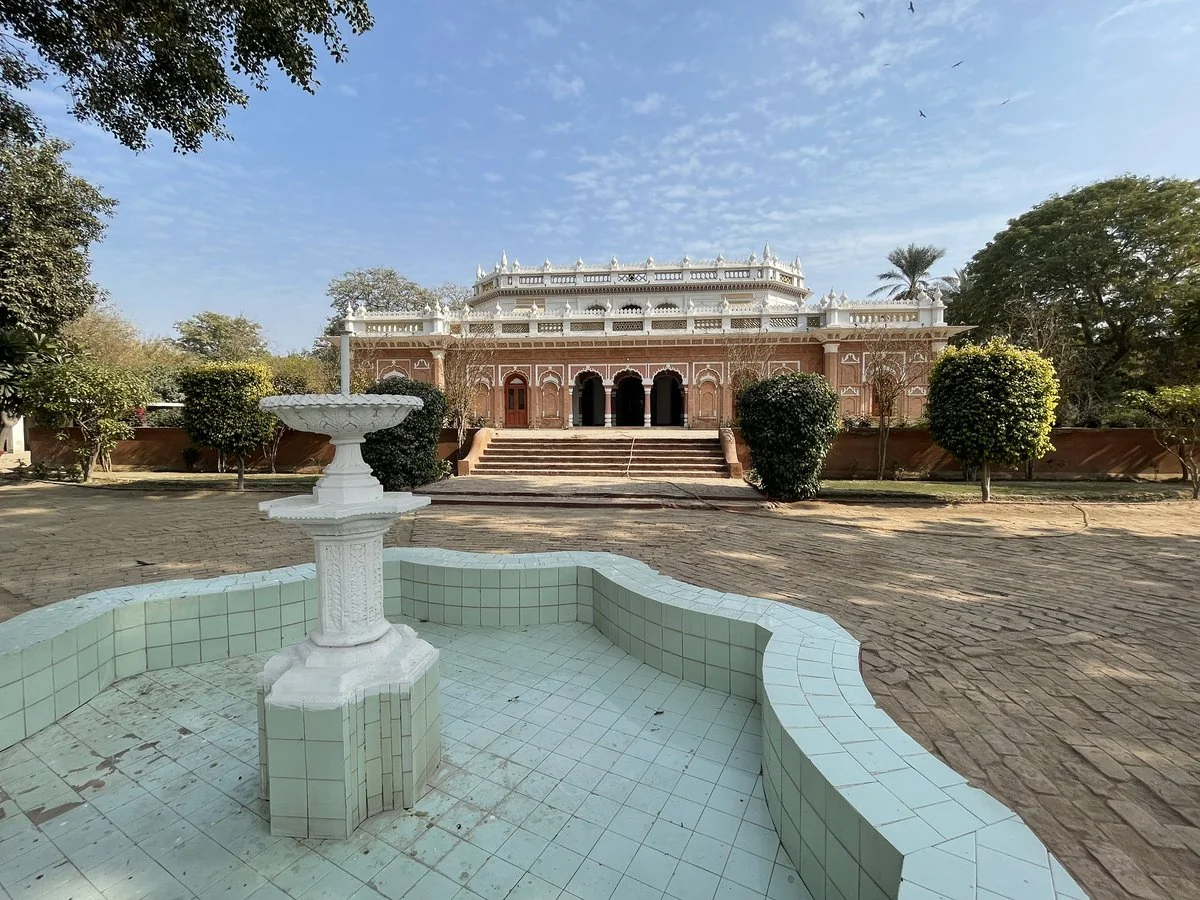
All uploaded Farukh Mahal images are normalized into web-ready files and mapped directly to this route.
This page is stronger when it stays honest about what is already firm and what still needs a deeper source stack. That makes Farukh Mahal useful without weakening the site’s overall heritage standard.
Farukh Mahal is now a fully published route in the palace branch, not just an orphaned image folder or temporary archive placeholder.
The current public strength of the page is the uploaded photo set itself, organized in a clear gallery and framed inside the live Bahawalpur palace system.
The page avoids forcing dates, patronage, or access promises that have not yet been verified to the same standard as Noor Mahal or Darbar Mahal.
Not every live page needs to pretend it already carries the same documentary strength. Farukh Mahal matters because it broadens the royal architecture branch while keeping the factual standard intact.
Farukh Mahal helps show that Bahawalpur’s palace story is wider than the core landmarks most visitors already know.
Instead of leaving uploaded photos buried in storage, this page turns them into a readable, navigable public route.
The route stays worthwhile today because it publishes what is already solid without padding the page with unsupported backstory.
The right way to use Farukh Mahal is as part of a broader heritage reading, not as a standalone substitute for the stronger city-anchor pages.
Open Farukh Mahal after Noor Mahal, Darbar Mahal, or Gulzar Mahal when you want the branch to feel broader and more connected.
Do not treat this route like a fully documented palace dossier yet. Its current value is visual strength plus branch continuity.
Farukh Mahal helps the palace network read as a real system rather than a short list of only the most famous stops.
This page works best when it hands visitors into the stronger guide pages and then back into the wider site architecture.
Use Noor Mahal first if you want the clearest verified public-facing palace route before opening secondary pages.
Open Noor MahalGulzar Mahal gives the palace branch its residential context and pairs naturally with Farukh Mahal as a secondary read.
Open Gulzar MahalDarbar Mahal is the stronger court-and-ceremony page if you want firmer contextual framing after Noor Mahal.
Open Darbar MahalReturn to the hub when you want Farukh Mahal read as part of the full Bahawalpur palace route, not as an isolated page.
Open the palaces hubNishat Mahal extends the same branch with another full uploaded image set in the same polished page format.
Open Nishat MahalUse the planning hub when you want to place the palace branch into a realistic Bahawalpur city day instead of treating each page as a separate trip.
Open the planning hubThis page answers the practical questions that matter most right now: what the route is for and how strongly to rely on it.
It is now a full site page in design and structure, but its historical wording remains more conservative than Noor Mahal because the source stack is still lighter.
The strongest current asset is the full normalized image gallery and its placement inside the wider palace route system.
Usually no. Noor Mahal remains the clearest first palace. Farukh Mahal works better as a second or third branch page afterward.
The page is now visually and structurally aligned with the stronger palace routes while keeping its factual claims disciplined and defensible.